Home »
Brands are choosing UGC over Influencer marketing


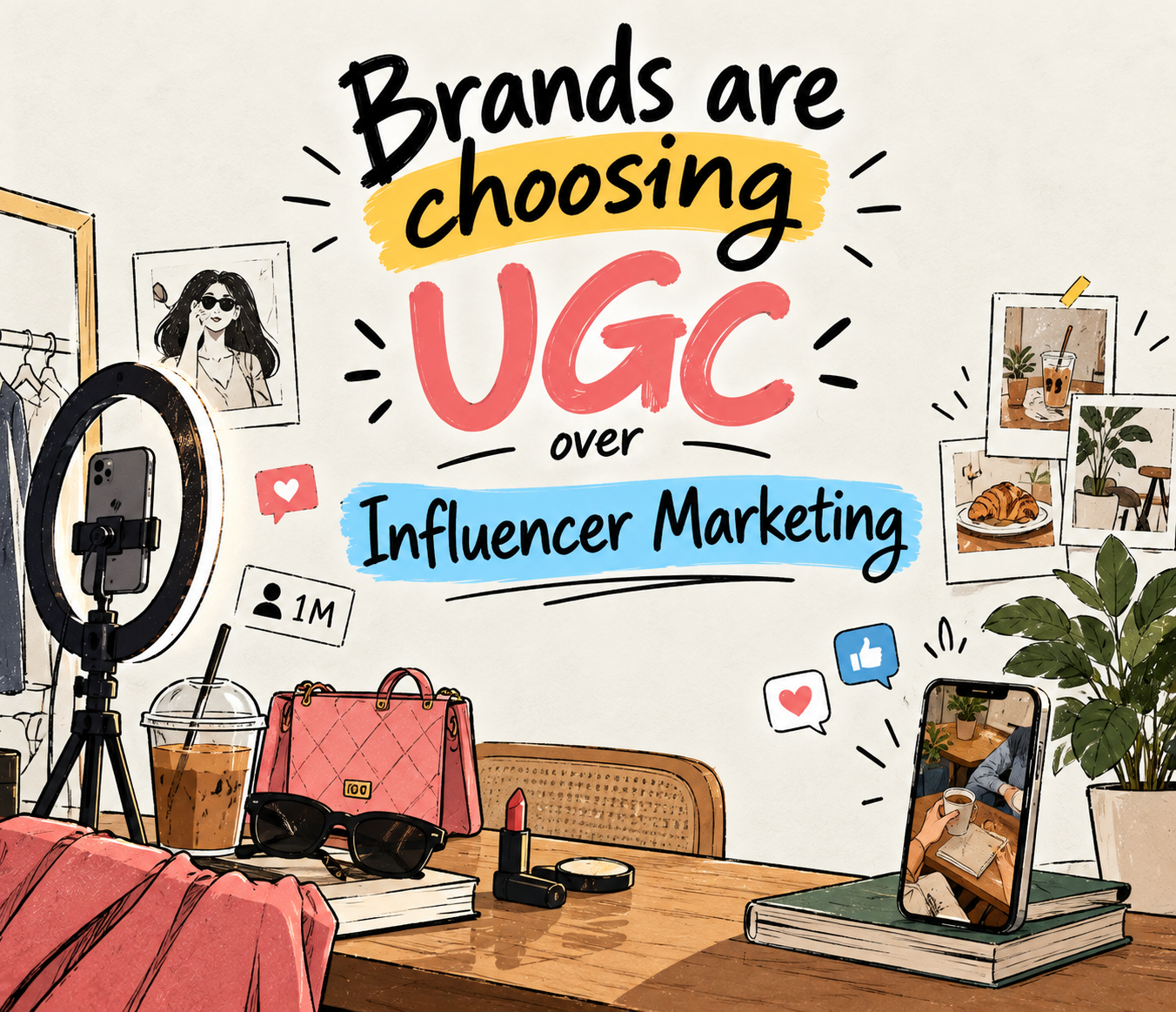
Brands are choosing UGC over Influencer marketing
Brands are choosing UGC over Influencer marketing
For years, influencer marketing was one of the easiest ways for brands to get their products in front of an audience. Find a creator with a large following, collaborate with them and get your product featured. But social media has changed quite a bit. Today, brands are increasingly investing in User-Generated Content (UGC) content that feels less like a traditional advertisement and more like something a real customer or creator would naturally share.
This doesn’t mean influencer marketing is disappearing, it simply means brands are looking at creators differently and asking a more important question: Do we need their audience, their content, or both?
UGC Feels More Authentic

One of the biggest reasons brands are turning towards UGC is authenticity. People have become very good at recognising advertisements. A highly polished video, a scripted recommendation and a perfectly placed product can sometimes feel like an ad before the creator has even finished their first sentence.
UGC takes a different approach, it can be a creator talking about their personal experience with a product, demonstrating how they use it, unboxing it or answering a common customer question. The content feels more natural because it is designed to fit into the way people already consume content on social media.
Influencer Marketing and UGC Serve Different Purposes

It is important not to treat UGC and influencer marketing as the same thing. With influencer marketing, you are often paying for access to the creator’s audience. Their community, credibility and reach are a major part of what you are investing in.
With UGC, the main value is often the content itself. A creator may not have a massive following , but they can still create a great product demonstration, testimonial or reel that the brand can use on its own social media or in advertising. So the choice isn’t necessarily between influencers and UGC. It depends on what the brand is actually trying to achieve.
Brands Can Create More Content With UGC
Another advantage of UGC is the sheer amount of content brands can create. Instead of depending on one creator for one campaign, a brand can work with multiple UGC creators and get different perspectives on the same product.
One creator could make a product tutorial, another could create a testimonial, someone else could show how they use the product in their everyday routine. This gives brands more creative options and, importantly, more opportunities to understand what kind of content their audience responds to.
It also gives brands more control over their content.
Influencer content is usually created for the influencer’s platform and audience. UGC gives brands more flexibility because the content can often be created specifically for the brand’s requirements and then used across different marketing channels. A single piece of content could potentially be used on Instagram, as a paid advertisement, on a product page or even in an email campaign. This makes UGC less about one post and more about building a content library that the brand can continue using.
But Does This Mean Influencer Marketing Is Dead?
Not at all. Influencer marketing still has one major advantage that UGC cannot automatically replace, the community.
A creator who has spent years building trust with their audience can introduce a brand to thousands or even millions of relevant people. That can be particularly valuable for product launches, awareness campaigns and brands trying to enter a new audience or category. The problem isn’t influencer marketing itself, the problem is assuming that a creator with a large following will automatically deliver the best results for every marketing objective.
The Best Strategy May Be a Combination of Both
For many brands, it doesn’t have to be UGC or influencer marketing. It can be both.
An influencer can help introduce the brand to a new audience, while UGC can give the brand relatable content that it can use across its own marketing channels.
One can help with reach and awareness. The other can help with content and relatability. The right mix will depend on the brand, its audience and what it wants its marketing to achieve.
Why Digitally Desi?
At Digitally Desi, we believe social media marketing should start with the objective, not the trend.
UGC might be the right approach for one brand, while influencer marketing or a combination of influencer content, UGC, organic social media and paid advertising might make more sense for another. Before deciding what kind of content a brand needs, we look at the business, its audience, its positioning and what it actually wants marketing to achieve.
Because the goal isn’t to create content simply because everyone else is doing it. The goal is to create content that works for the business. So if you are wondering whether your brand should invest in influencers, UGC or both, don’t start with the question, “Which one is trending?” Start with, “What do we actually need this content to do?”
That answer will tell you where your marketing budget should go.