Home »
The Rise of Meme Marketing


The Rise of Meme Marketing
The Rise of Meme Marketing
Meme marketing isn’t about making your brand funny. It’s about making your brand understand the joke.
Social media has changed the way brands talk to their customers. But somewhere between carefully planned campaigns and endless promotional posts, something unexpected became one of the most powerful forms of digital communication: Memes.
Whether it’s a food delivery brand reacting to a cricket match, a fashion brand jumping onto a Bollywood reference, or a D2C brand turning an everyday struggle into a joke, memes have become a regular part of how businesses communicate online. But here’s the reality. Simply posting a trending meme doesn’t make your brand relatable.
Many brands see a viral format, add their logo, write a caption and hit post, only to wonder why the content isn’t getting the engagement they expected. And then, just like always, the algorithm gets the blame.
But the real problem isn’t always the algorithm. It’s the strategy.
A meme is only the format. What makes meme marketing work is understanding culture, context, timing, brand fit and, most importantly, your audience.
Why Does Indian Internet Culture Give Brands So Much to Work With?
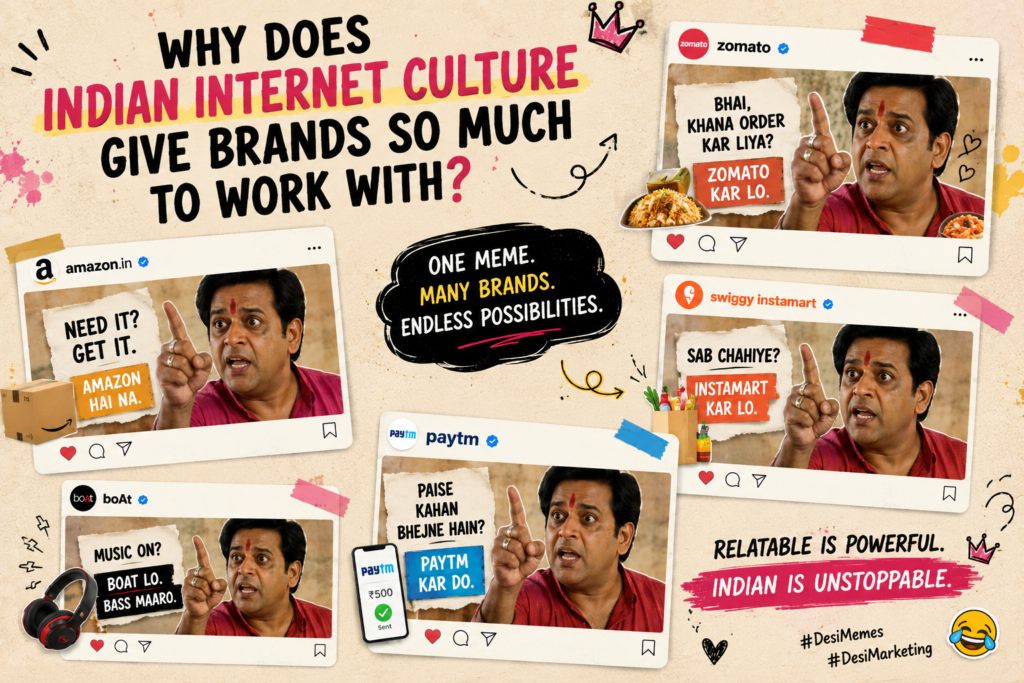
India has an unusually rich internet culture for brands to participate in. Bollywood dialogues for every possible emotion, cricket matches that can cause national-level stress, parents with extremely predictable one-liners and enough everyday chaos to create a new meme every five minutes.
But what makes Indian internet culture particularly interesting is the sheer number of shared references we have.
We move between English, Hindi, Hinglish and regional languages without thinking twice. Bollywood, cricket, workplace culture, family dynamics, festivals and social moments constantly give people something to talk about, react to and, eventually, turn into memes.
A joke about an Indian mother asking when you’re getting married can be understood by someone in Kolkata, Delhi or Bengaluru. A meme about waiting for your salary can be understood by a college student waiting for pocket money or a professional waiting for the 1st of the month.
These shared experiences give brands a huge cultural space to work with.
The challenge is knowing where your brand fits into that conversation.
From Random Jokes to Real Marketing
Memes were never really created for brands. They were created for people to share an inside joke, react to something happening online or simply say, “This is literally me.”
But brands soon realised something: if people were already spending hours consuming and sharing memes, why not meet them there?
What started as occasional attempts to look “cool” on social media gradually evolved into a much more strategic approach to content.
There is, however, a difference between posting a meme and doing meme marketing. Posting a meme is seeing what’s trending and finding a way to put your brand into it. Meme marketing is understanding why that moment is resonating with people and figuring out whether your brand has a natural place in the conversation.
The difference may seem small, but it’s what separates a brand that understands internet culture from one that simply wants to look funny online.
Zomato Picked Up Meme Marketing as a Core Part of Its Strategy
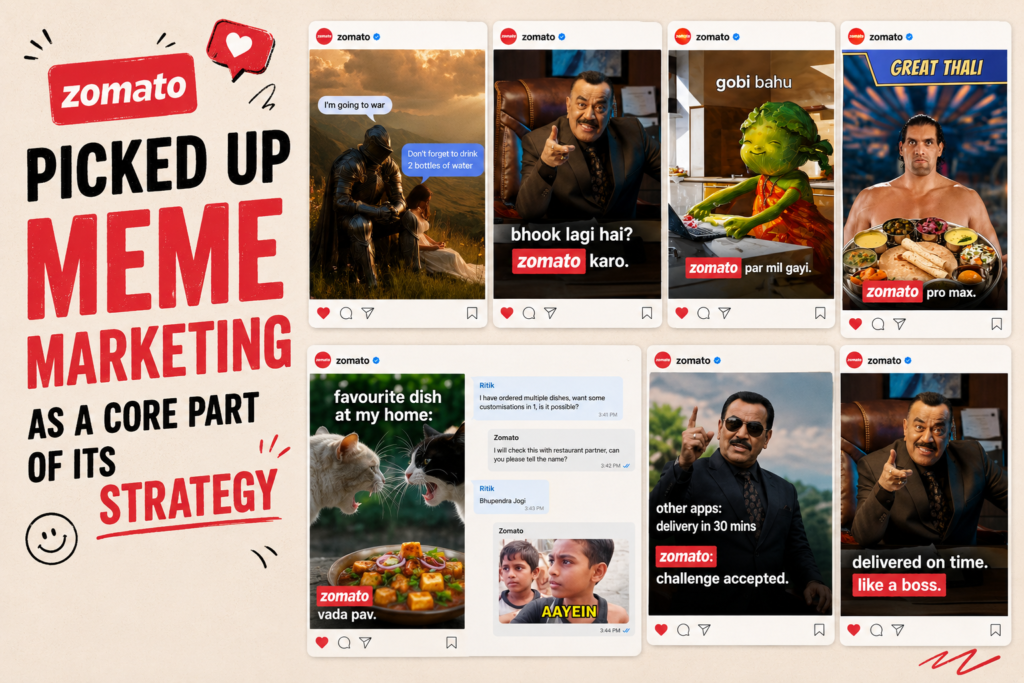
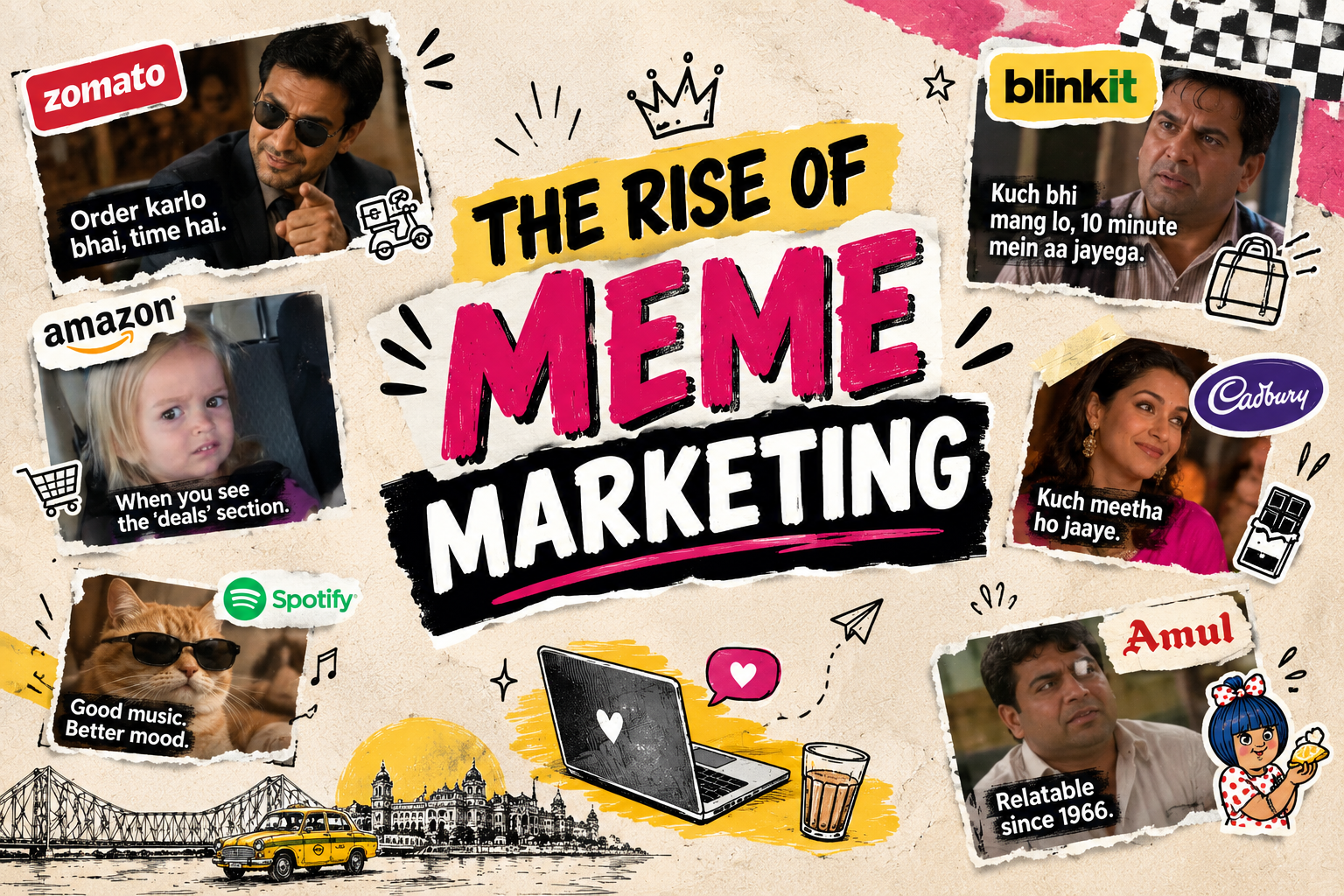
Zomato is one of the best examples of how brands can use humour to build a recognisable social media personality. But what makes its approach work isn’t simply the fact that Zomato posts memes. It’s how the brand uses them.
Zomato is quick to respond to random viral reels, cultural moments and conversations that are already taking place online. Its copy is often extremely minimal because it doesn’t need to explain a joke the audience already understands.
The brand also understands internet language without trying too hard to imitate it. And importantly, it doesn’t force its product into every meme. Sometimes, the brand itself becomes the punchline.
Over time, this has created a personality that people can recognise even before they see the logo. The content feels like it belongs on the internet rather than feeling like an advertisement placed on the internet. And that is what makes the strategy work.
The Comment Section Is Part of the Campaign
One of the most interesting things about meme marketing is that the content doesn’t necessarily end when the post is published. The comments can become a second layer of content.
People add their own jokes, tag friends, disagree with the brand, create variations, or take the conversation somewhere the brand never expected. Sometimes, the comment section gets more attention than the original post.
For marketers, this is more than just an engagement metric.
It is a way to understand what your audience responds to, what they find funny and what gets them talking.
The audience isn’t just watching the campaign. They’re helping shape it.
The Future of Meme Marketing Is About Being Relevant
Meme marketing isn’t about replacing traditional advertising with jokes. It is about understanding how people communicate online and finding a natural way for brands to participate.
The brands that succeed won’t necessarily be the ones posting the most memes. They will be the ones that know when to participate, when to stay out, and how to make their presence feel natural. Because at the end of the day, people don’t share a meme because a brand wants them to.
They share it because it feels like them. And that’s what makes meme marketing more than just another social media trend. Done well, it can help a brand become part of the culture its audience is already participating in.
And sometimes, the smartest meme marketing decision is not to post. A trend may be getting millions of views, but that doesn’t automatically make it relevant to your brand. If the connection requires a paragraph to explain, if your audience isn’t participating in the conversation, or if the trend clashes with your brand personality, sitting it out is often better than forcing a connection. Not every trend needs a brand cameo.
At Digitally Desi, We Focus on the Strategy Behind the Trend
We don’t believe in jumping onto every trend just because it’s trending. We look at the culture, the audience, the brand and the bigger objective before deciding whether a trend is actually worth participating in. At Digitally Desi, we believe the best social media strategies don’t follow the internet. They understand it.