Home »
Google Launched Pomelli in India: AI Marketing for SMBs


Google Launched Pomelli in India: AI Marketing for SMBs
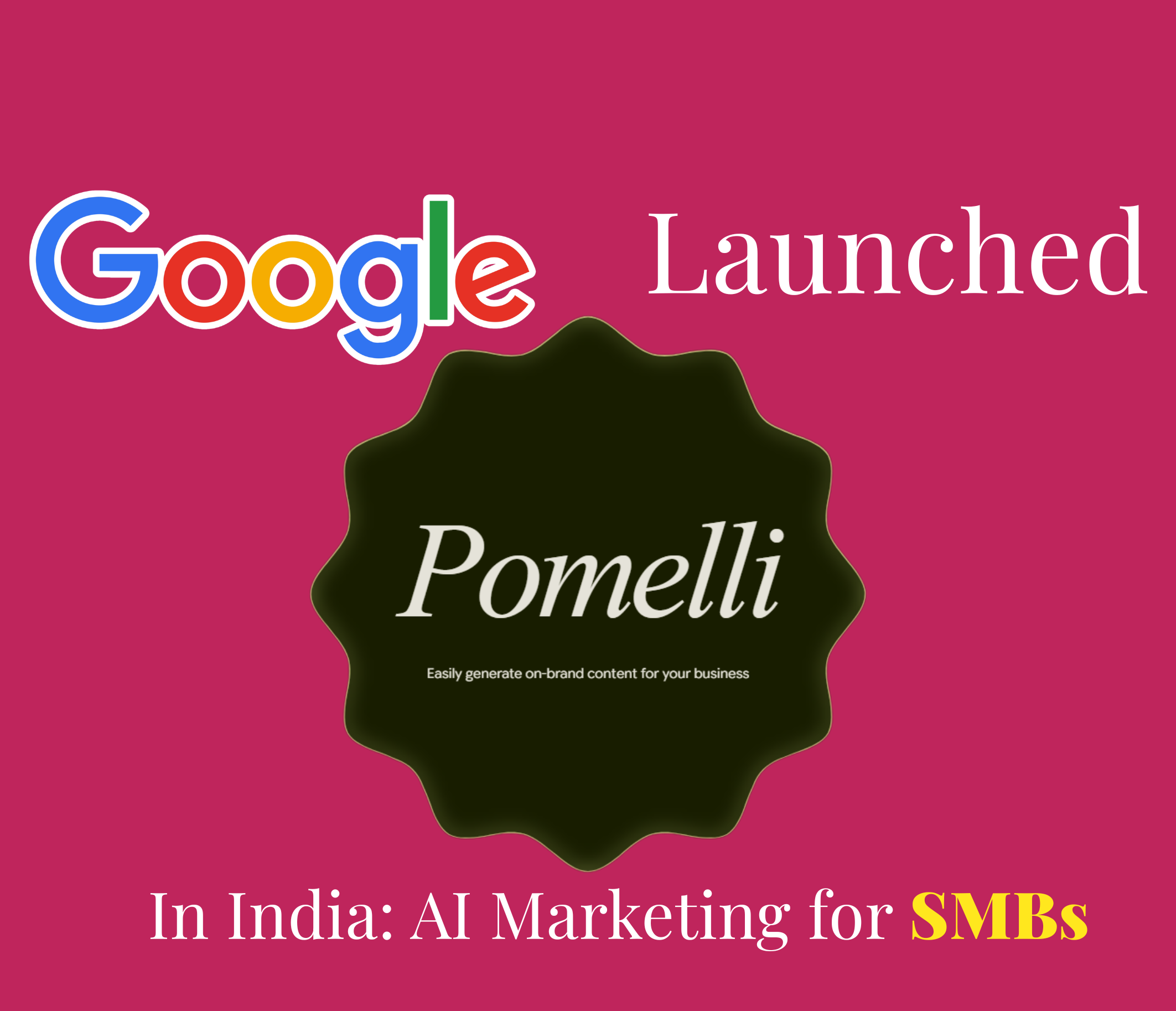
Google launched Pomelli a few months ago, and it’s starting to show what AI-led marketing might actually look like for everyday businesses.
For small and medium businesses, marketing is often about ideas and execution. Planning is manageable, but consistently creating content, testing variations, and maintaining brand consistency takes time and effort. Pomelli is built to solve exactly this gap.

What is Pomelli?
Pomelli is an AI-powered marketing assistant designed for SMBs, meaning businesses that usually operate with smaller teams, limited budgets, and less access to structured marketing processes.
What makes Pomelli different from basic AI tools is that it focuses on brand consistency, not just content generation. It allows businesses to input their brand elements like tone, visuals, and past content so the output feels aligned with tone, fonts, and colors rather than a copy.
One of its core ideas is something called a “Business DNA” profile, where the tool studies a brand’s style, messaging, and visual identity to generate content that actually matches how the brand communicates.

What does Pomelli actually do?
At a functional level, Pomelli is designed to reduce the effort that goes into repetitive marketing tasks.
It can generate ad copies, create multiple variations of the same campaign, and suggest audience directions based on inputs. It also helps in structuring campaigns faster by giving starting points instead of requiring everything to be built manually.
Another important part is how it handles variations. A lot of time in marketing goes into rewriting the same message in different ways. Pomelli speeds this up by generating multiple aligned versions, which can then be refined instead of being created from scratch.
Overall, it shifts the process from “creating everything manually” to “reviewing and improving generated outputs.”
How does this impact businesses, agencies, and brands?
The impact of Pomelli is not limited to just one side of the ecosystem.
For SMBs, it makes structured marketing more accessible. Instead of relying heavily on trial and error, businesses can start with a clearer direction and use their budgets more efficiently.
For agencies, it reduces the time spent on repetitive execution. This allows teams to focus more on strategy, positioning, and creative direction rather than just production.
For brands overall, it improves consistency. Since the tool is trained on brand inputs, the output across campaigns tends to feel more aligned, even when produced at scale.

AI in marketing: where things are heading
AI in marketing is moving from being an experimental tool to becoming part of regular workflows.
Tools like Pomelli are designed to fit into how marketing already happens, not replace it. They follow a structured approach where the brand is understood first, then campaign goals are defined, and then content is generated and refined.
This makes the process faster without completely removing human input. Instead of spending time on repetition, teams can focus more on direction and decision-making.
Pomelli is less about a single product and more about a shift in how marketing execution is evolving.
As AI tools become more context-aware and brand-focused, the gap between large teams and smaller businesses starts to reduce. The ability to produce consistent, scalable content is no longer limited to companies with bigger resources.
For now, the real advantage lies in understanding how to use these tools effectively rather than just adopting them.
At Digitally Desi, this is exactly how we see AI shaping marketing. Not as a replacement, but as a layer that makes execution faster while strategy, positioning, and storytelling still come from human understanding. The focus is not just on using tools like Pomelli, but on using them in a way that actually builds stronger, more consistent brands.